
Telehealth has become part of modern healthcare. For patients, it offers convenience, continuity and faster access to advice. For practitioners, it creates an opportunity to reach people beyond the consulting room, especially in a country where distance, cost and waiting times often delay care. But telehealth is not a shortcut. It is healthcare delivered through a different channel, and it must be managed with the same professional discipline as a face-to-face consultation.
In South Africa, that means the practitioner’s duty of care remains unchanged. Clinical judgement, informed consent, confidentiality, prescribing, referrals, recordkeeping and patient safety still apply. Practitioners must also ensure that their telehealth model is consistent with applicable HPCSA ethical guidance, POPIA, the National Health Act and their own professional obligations.
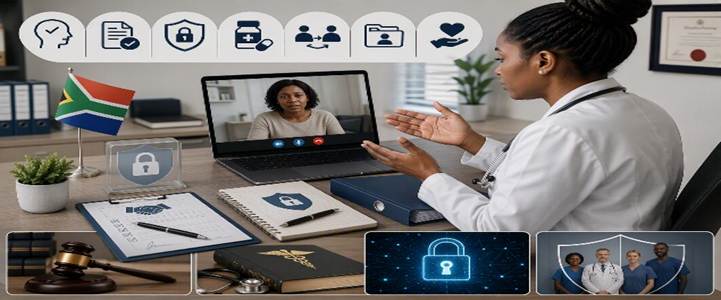
The greatest risk is not the technology itself, It is continuing remotely when the patient needs a physical examination, urgent referral or emergency assessment. Chest pain, stroke symptoms, breathing difficulty, suicidal ideation, suspected sepsis, serious injury, severe abdominal pain or a deteriorating child should never be treated as routine online matters. The practical rule is simple: if the patient cannot be assessed safely remotely, the consultation must move to in-person care, emergency services, hospital assessment or another safe form of care.
Consent must also be meaningful. A booking confirmation or a quick “yes” is not enough. The patient should understand that the consultation is remote, that a full physical examination may not be possible, that technology may fail, that privacy risks exist and that in-person care may still be required. Consent should preferably be recorded and retained as part of the clinical record.
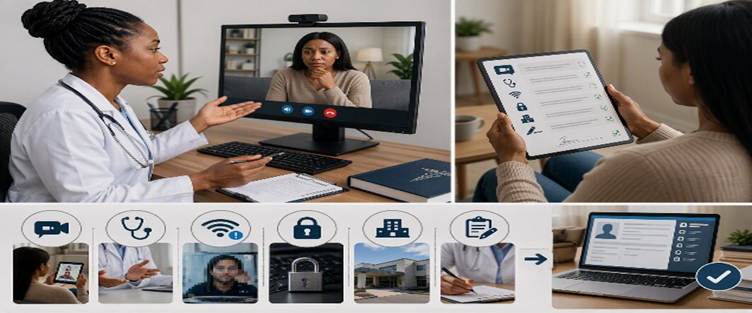
The record is often the practitioner’s defence. A telehealth note should show who the patient was, where they were, what symptoms were reported, what risks were considered, what could not be assessed remotely, what advice was given, whether consent was obtained, and what follow-up or referral was arranged. In a complaint or malpractice matter, the issue is often not simply that the consultation was virtual; it is whether the practitioner can explain why remote management was reasonable.
The choice of channel matters. A secure portal, video consultation, telephone call, email exchange and informal messaging platform do not carry the same risk. At a minimum, the practitioner should confirm the patient’s identity, location, privacy, communication ability and contact details, particularly where an emergency escalation may be required.
Privacy and cyber security are now part of patient safety. Health information is sensitive personal information under POPIA and must be protected through secure platforms, access controls, proper authentication, staff training and clear incident-response procedures. A weak digital process can expose a practice to data breaches, impersonation, ransomware, regulatory complaints and reputational damage.
Technology also changes the nature of identity risk. Practitioners may rely heavily on what they see or hear on a screen, while artificial intelligence can now manipulate faces, voices, documents and images. The response should be proportionate: reasonable verification is needed where identity, consent, prescriptions, certificates, payment or clinical risk is material.
The insurance position must be checked before telehealth is offered. Practitioners should not assume that medical malpractice cover automatically includes every telehealth activity. The policy wording, schedule, declared activities, territorial limits, exclusions, cyber extensions and professional registration requirements must be reviewed. Cyber, privacy, technology and business-interruption exposures may require protection beyond ordinary malpractice cover.

The bottom line is that telehealth is not a lower-risk version of healthcare. It is healthcare with added demands around suitability, consent, records, privacy, security, identity and insurance. Used well, it can improve access to care. Used casually, it can create avoidable clinical, legal and reputational harm.
Sources considered include HPCSA telehealth guidance, POPIA, the National Health Act and South African telehealth professional literature.
Disclaimer: This article is for general information only and is not legal, clinical or insurance advice. Practitioners should obtain advice on their specific facts where the risk is material.